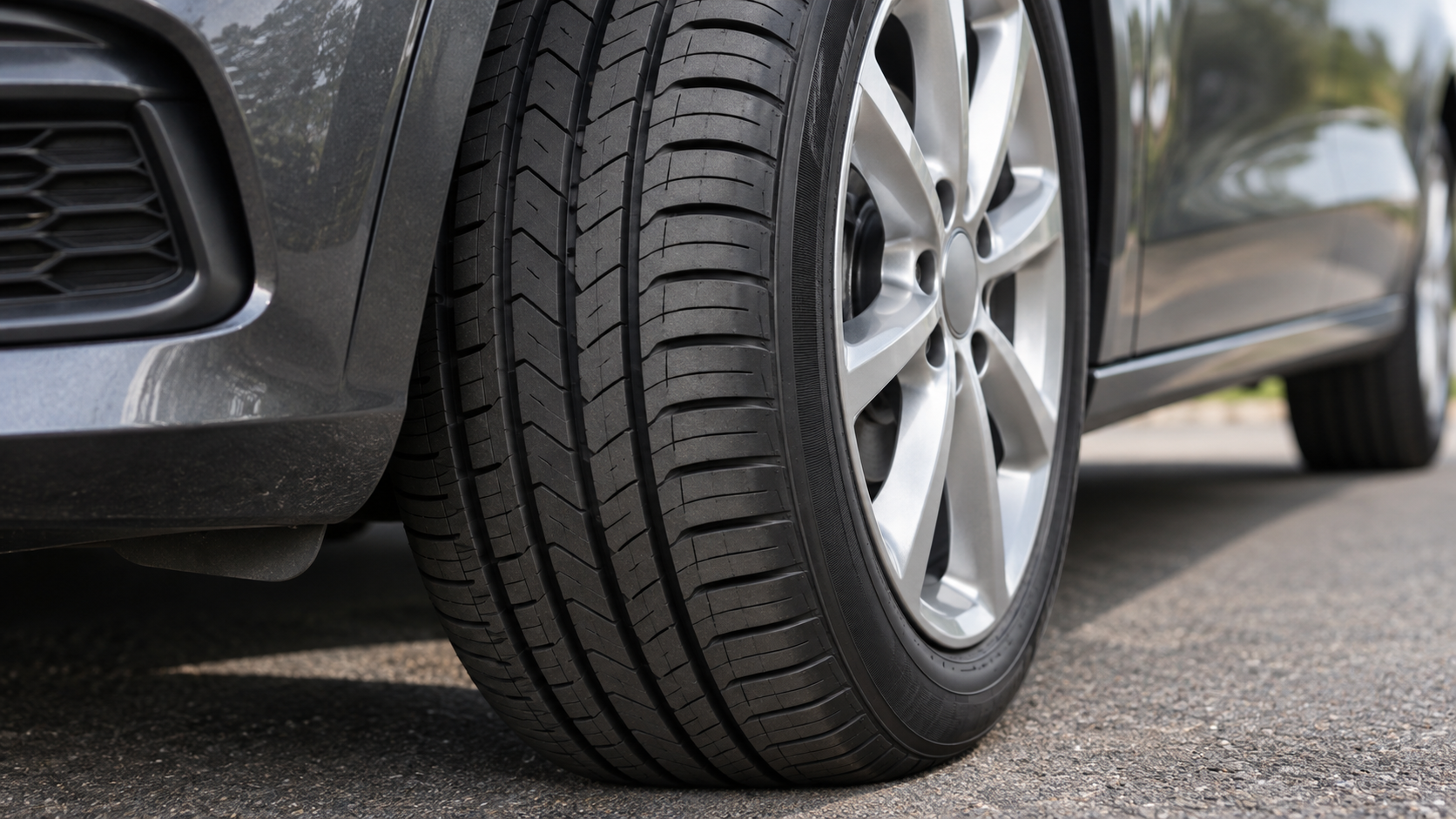
A tire-pressure warning can appear on a cold morning or during an otherwise ordinary drive. It is a prompt to check the tires, not a diagnosis of a particular problem. Your owner’s manual explains the warning symbols and procedures for your vehicle.
1. Look at the warning—and the tires
A steady tire-pressure monitoring system (TPMS) light usually means at least one tire is significantly underinflated. A light that flashes before staying on may indicate a system malfunction. Do not assume the tires are properly inflated just because the system has a fault.
If a tire looks flat or damaged, or the car vibrates, pulls, or feels difficult to control, stop somewhere safe as soon as you can and arrange assistance. Continuing on a flat tire can damage it further.
2. Use the vehicle’s pressure specification
Find the recommended cold pressures on the driver’s door-jamb label or in the owner’s manual. Front and rear values may differ. Use a reliable gauge when the tires are cold—NHTSA describes this as not having been driven for at least three hours—and adjust to the vehicle’s specification. Do not use the tire sidewall’s maximum pressure as your target.
Temperature changes can make a borderline-low tire trigger the light overnight, then clear it as the tire warms. Still check the pressure. A light going out is not a substitute for measuring it.
3. Get recurring pressure loss checked
If a tire keeps losing air, have it inspected. A puncture, valve problem, or wheel leak is among the possibilities; topping it up repeatedly will not identify the cause. Follow the manufacturer’s reset procedure only after the pressures are correct and any underlying issue is addressed.
JNC Auto Shop provides tire services and diagnostics in Phillipsburg. Tell us when the light appears and whether any tire needs air more often than the others. For seasonal preparation, see our New Jersey winter car-care checklist.
Read more about pressure checks and TPMS in NHTSA’s tire safety guidance.